Перейти к основному контенту


Half-day history tour

Get ready for a day of historical discoveries in the heart of Istanbul. After a delicious breakfast, you can walk through Hippodrome Square and witness the city’s past, experience tranquility under Blue Mosque’s magnificent dome, and explore the impressive architecture and art of Hagia Sophia.

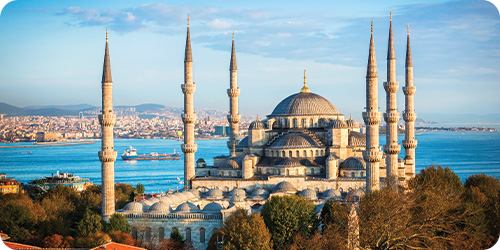
Sultanahmet Mosque

One of Istanbul’s iconic structures, the Sultanahmet Mosque is located directly opposite the Hagia Sophia. Built during the late period of Classical Ottoman architecture, this important landmark is also known as the “Blue Mosque” due to its interior, which is decorated with thousands of blue-hued Iznik tiles.

Hippodrome

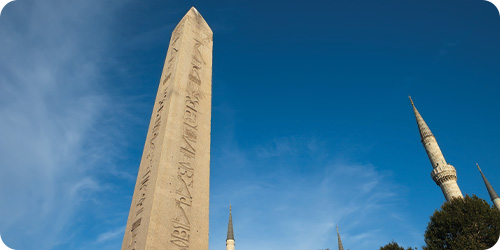
The Hippodrome, where horse races were held during the Roman period, was one of the most important social spaces of the era. Today, the area extending from the German Fountain to the Obelisk, Serpent Column, and Woven Column forms the center of the Historical Peninsula.

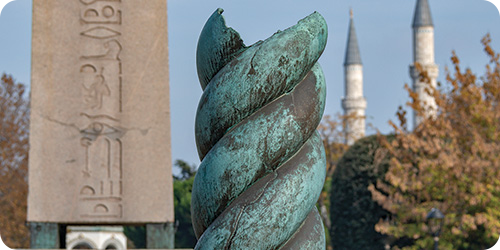
Serpent Column

Originally built as a victory monument in Ancient Greece, the Serpent Column was brought to Istanbul during the Byzantine era. The column, the largest surviving monument from the Classical period, is said to have once protected the city from insects and reptiles.

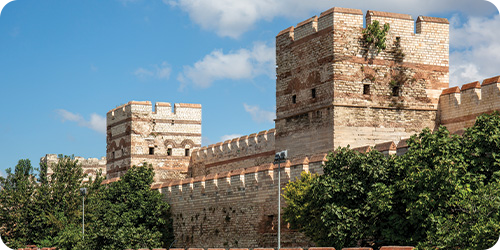
Byzantine City Walls

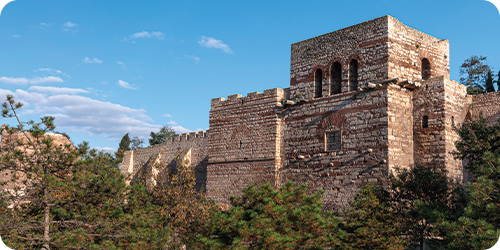
Built in the 5th century by Byzantine Emperor Theodosius II, these walls are considered to be among the most valuable surviving examples of Roman military architecture. Damaged during the conquest of Istanbul and repaired by Sultan Mehmed the Conqueror, the walls were crucial for the city’s defense.

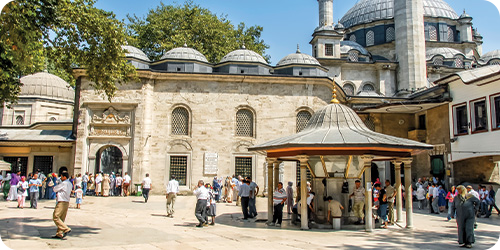
Eyüp Sultan Mosque

Containing the tomb of Abu Ayyub al-Ansari in its garden, the Eyüp Sultan Mosque is one of the city’s spiritual centers. The mosque and its surroundings, symbolic of Ramadan in Istanbul, are heavily visited on Fridays, holidays, and special occasions.

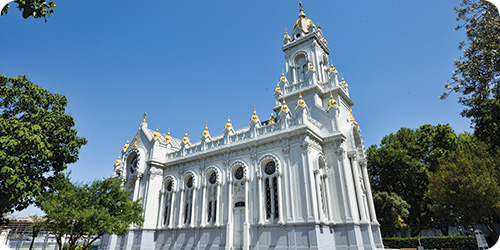
Sveti Stefan Church (St. Stephen Church)

Originally made of wood, the Sveti Stefan Church was erected from cast-iron pieces fabricated in Vienna and then shipped via the Danube River and the Black Sea. Known for its rich interior decorations and its place in the city’s cultural life, the church belongs to the Bulgarian Orthodox community and has been active since the 19th century.

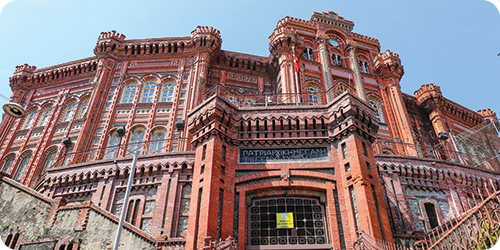
Fener Greek High School

Founded after the conquest of Istanbul, the Fener Greek High School is one of three Greek educational institutions still operating today. The school moved to its current building, a landmark red-brick structure resembling a castle, in 1881.

Istanbul Greek Orthodox Patriarchate

Located in Fener, the Istanbul Greek Orthodox Patriarchate is the most important center of the Orthodox Christian world. Situated in the same location since 1601, the Patriarchate features sacred relics and houses the Church of St. George in its courtyard.

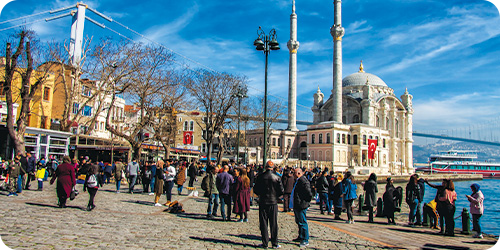
Ortaköy Square

One of Istanbul’s most popular landmarks, Ortaköy Square is located on the Bosphorus shoreline, near the foot of the Bosphorus Bridge. The Büyük Mecidiye Mosque and the Esma Sultan Mansion are in the area, as are numerous seaside cafes and street food vendors.

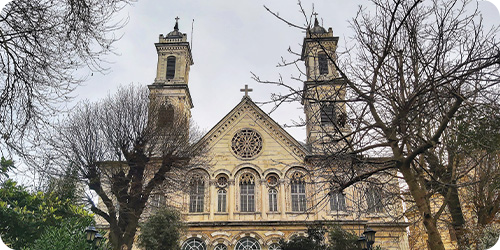
Hagia Triada Church

Set at the beginning of Istiklal Street in Taksim Square, Hagia Triada Church is one of the largest Greek Orthodox churches in Istanbul. The building, which features neo-Gothic, neo-Byzantine, and neoclassical elements, stands out for its harmonious blend of different architectural elements.

Dolmabahçe Palace

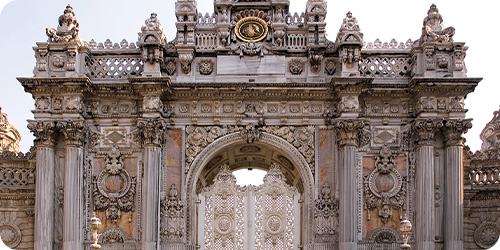
Designed by Garabet and Nigoğayos Balyan, the renowned father and son architectural team, Dolmabahçe Palace was built in the mid-19th century and served as the royal residence and main administrative center of the Ottoman Empire until 1922. Featuring baroque, rococo, and neoclassical elements, the palace is one of the monumental structures erected on the Bosphorus shore.

Balat

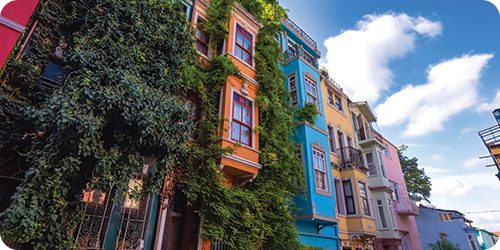
Balat, a neighborhood set along the shore of the Golden Horn, is notable for its colorful houses, picturesque streets, and period-spanning architecture. Reflecting its multicultural past in its population as well as its scenery, this unique Istanbul district is now home to boutique cafes and a popular filming location for TV series.

Walled Obelisk

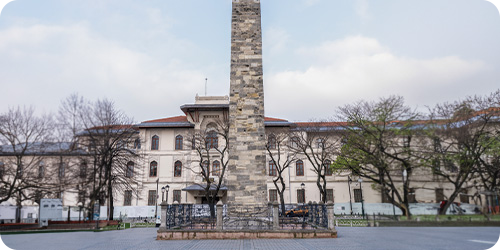
Located in Sultanahmet Square and also known as Constantine’s Obelisk, this monument served as a gathering spot for Janissaries during the Ottoman period. While the obelisk’s bronze cladding has been lost over time, it still attracts attention with its original stone structure.

Hagia Sophia Mosque (Visit from outside)

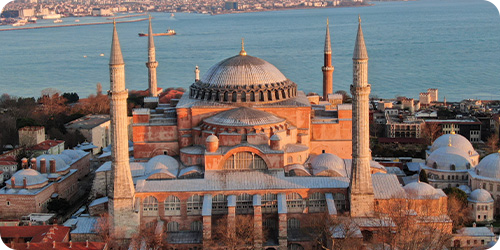
Built in the 6th century during the reign of Emperor Justinian I, the name means “Holy Wisdom” in Ancient Greek. One of the most impressive examples of Byzantine architecture and the largest domed structure of its time, Hagia Sophia continues to serve as a mosque today, as it did during the Ottoman period.

Museum of the History of Science and Technology in Islam

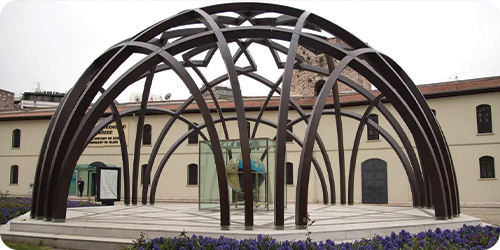
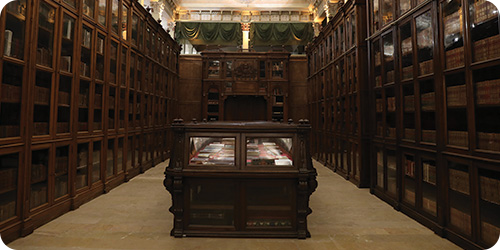
Located in Gülhane Park, the Museum of the History of Science and Technology in Islam is housed in the historic Has Ahırlar building. The museum’s collection displays replicas of scientific instruments and discoveries developed by Muslim scholars in the fields of astronomy, medicine, geography, and engineering.

Ayvansaray Sahabe Tombs

In the Fatih district’s Ayvansaray neighborhood are tombs of some of the Companions of the Prophet Muhammad (PBUH); these individuals witnessed the early years of Islamic history. The graves of Abdussadık Amir Ibn Same and Abu Zer al-Gifari, Companions of the Prophet Muhammad (PBUH), are also in this area.

Meryemana Church

Set in the Tarlabaşı neighborhood, the 17th-century Meryemana Church is considered among the leading examples of that era’s stonework. Restored at different times, the church, which also houses a school, is an important center for the Syriac community in Istanbul.

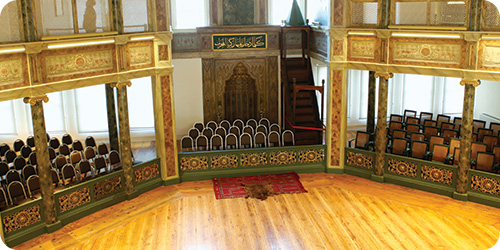
Ahrida Synagogue

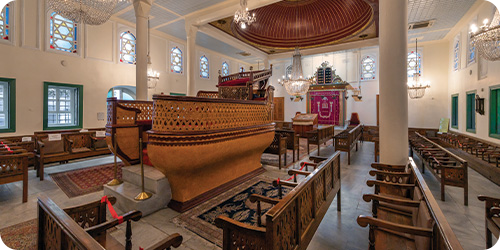
Erected in the early 15th century, the Baroque-style Ahrida Synagogue is one of the largest synagogues in Istanbul. The building is notable for its Teva (prayer platform), which is in the shape of a ship’s prow and is said to have been inspired by either Noah’s ark or Ottoman galleys.

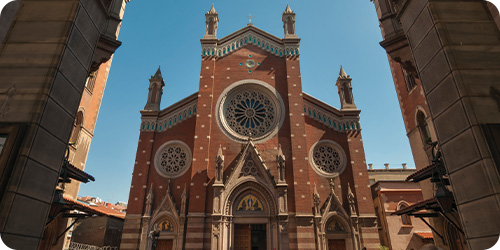
The Church of St. Anthony of Padua (Church Of Saint-Antoine)

Originally built in 1725, the current structure, a neo-Gothic cathedral that is the largest Catholic church in Istanbul, opened for worship in 1912. The church’s central and accessible location on Istiklal Street makes it a place of worship visited by people of different faiths.

Galata Mevlevihanesi (Galata Mevlevi Lodge)

Bringing together Sufism and music under one roof, the Galata Mevlevi Lodge was the first Mevlevi lodge established in Istanbul. The historic building, which once served as the Divan Literature Museum, displays works, manuscripts, and musical instruments related to Mevlevi culture. The complex also includes a peaceful garden.

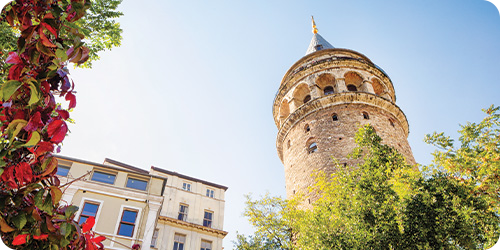
Galata Tower (Visit from outside)

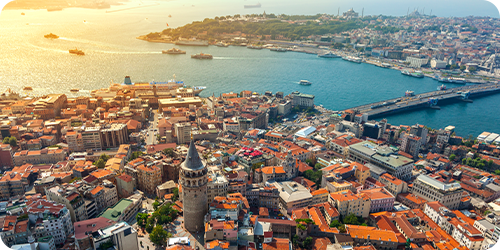
Built by the Genoese in the 1300s as part of the Galata walls, the Galata Tower is in the Beyoğlu district. Used for fire watch during the Ottoman period, the structure is also remembered as the launch point for Hezarfen Ahmet Çelebi’s legendary flight attempt.

French Consulate General in Istanbul

Located on Istiklal Street, the French Consulate General in Istanbul is a historic building that has been in service since the 19th century and reflects the characteristic architecture of Beyoğlu. In addition to its official function, the compound serves as a cultural center.

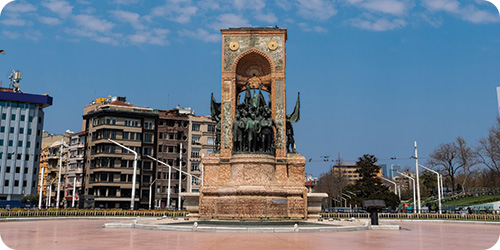
Republic Monument

Inaugurated in Taksim Square in 1928, the Republic Monument was built in Rome and brought to Istanbul by ship. Located at the north end of Istiklal Street, the bronze monument represents the War of Independence on one side and the Republic of Türkiye on the other.

Hüseyin Ağa Mosque

Located on Istiklal Street, the Hüseyin Ağa Mosque opened for worship in the late 1500s. Some historical sources record that the mosque, which has undergone numerous repairs, originally had a dome; the building’s courtyard houses an elegant fountain.

Obelisk

Carved from granite in Ancient Egypt, the Obelisk was brought to Istanbul during the reign of Byzantine Emperor Theodosius I. Located in Sultanahmet Square, this magnificent monument adorned with hieroglyphics is one of the oldest monuments in Istanbul, with a history of approximately 3,500 years.

Yıldız Palace

On a hill overlooking the Bosphorus, the vast Yıldız Palace complex served as the residence for Sultan Abdülhamid II and the seat of Ottoman government from 1876 to 1909. One of the last palaces of the Ottoman Empire, the complex features extensive gardens along with pavilions, summer houses, and a library housing thousands of works.