
Footsteps of centuries: Ephesus Ancient City
Step into Ephesus, one of the best‑preserved ancient cities in the world. Walk along marble streets, discover monumental temples and theatres, and feel the layers of history that still shape this timeless site.
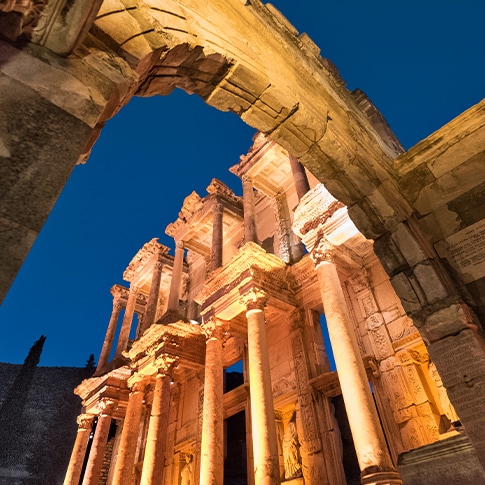
Ephesus Night Museum
The Ephesus Night Museum concept goes beyond simply making the ancient city visible in the dark; it introduces a next‑generation aesthetic that accentuates architectural nuances. Specially designed artistic lighting highlights the fine craftsmanship on millennia‑old marble structures, revealing details that might easily be missed during the day. After sunset, monumental landmarks such as the Library of Celsius and the Great Theatre become part of a striking “time tunnel” effect, as light and shadow transform them into living masterpieces.
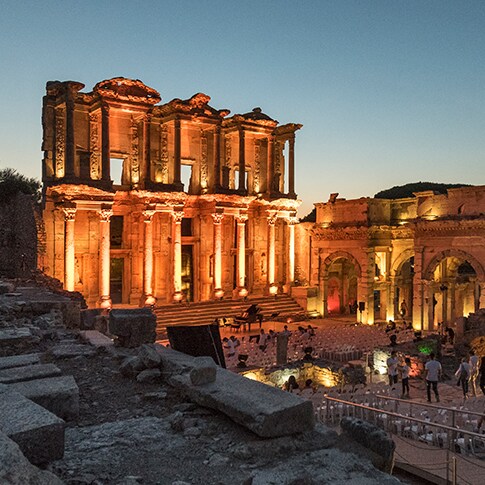
Cultural Events and Digital Guiding
The night museum experience does more than offer a visual feast; it enriches the soul of the ancient city with modern technology and artistic activities, inviting visitors to wander under the stars on an interactive journey through history. Periodically organized classical music recitals and live cultural performances within this enchanting setting elevate your visit into an unforgettable arts and culture experience. With next‑generation guidance, including smart audio guides and digital assistance, you can listen to the stories behind each monument and explore what nightly life in antiquity might have been like, all while enjoying your evening stroll.
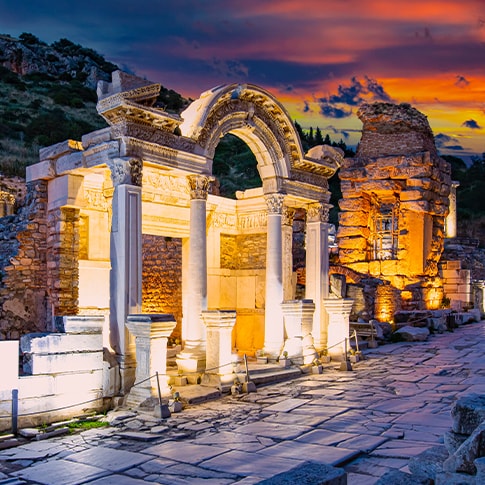
Comfortable Travel Experience and Sustainable Tourism
During the summer months, high temperatures in the Aegean region can make exploring open‑air archaeological sites challenging. The night museum offers a comfortable alternative, allowing you to replace the intense daytime sun with a refreshing Aegean breeze and discover the ancient city in a more relaxed, peaceful, and leisurely way. At the same time, it serves as a sustainable model that protects cultural heritage by balancing visitor traffic across day and evening hours, reducing peak‑time density and helping to preserve this peerless legacy for future generations.
Tokyo (NRT)to
Izmir (ADB)Tokyo (HND)to
Izmir (ADB)Osaka (KIX)to
Izmir (ADB)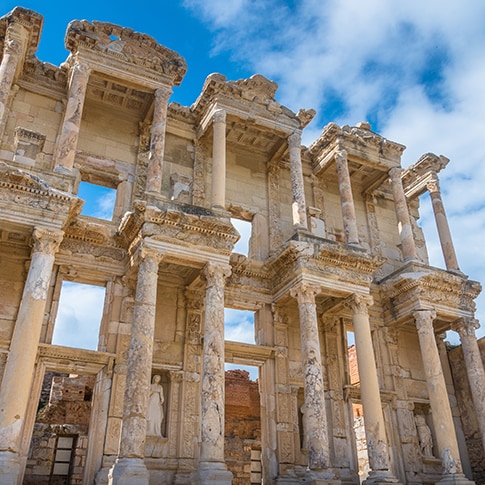
The Library of Celsius
Built in the 2nd century AD during the Roman period, the Library of Celsius is one of the most iconic and best‑preserved structures in the ancient city of Ephesus. Commissioned by a son in honor of his father, a Roman consul, this monumental building was known as the third‑largest library of the ancient world, after Alexandria and Pergamon. Housing around 12,000 manuscript scrolls, the library reflects both the literary richness of its time and the peak of Roman architectural design with its elegant façade. Its double‑layered walls were engineered to protect the scrolls from humidity and temperature changes, showcasing the advanced technical knowledge of the era.
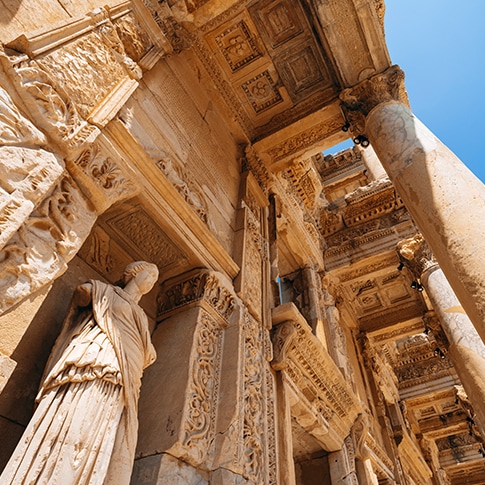
Four Female Statues
On the façade, four female statues personify core values of the ancient world: wisdom (Sophia), virtue (Arete), intellect (Ennoia), and knowledge (Episteme). By placing these four personifications on the front of the building, the designers turned the façade into a symbolic statement: this was not only a storehouse of scrolls, but a monument to the values that defined an educated and refined society—wisdom, moral excellence, thoughtful reflection, and solid knowledge. In doing so, the library’s architecture itself became a visual lesson, communicating its message even to those who could not read the texts inside. The sculptures thus bridge art and learning, embodying the intellectual and cultural ambitions of Ephesus at its height.
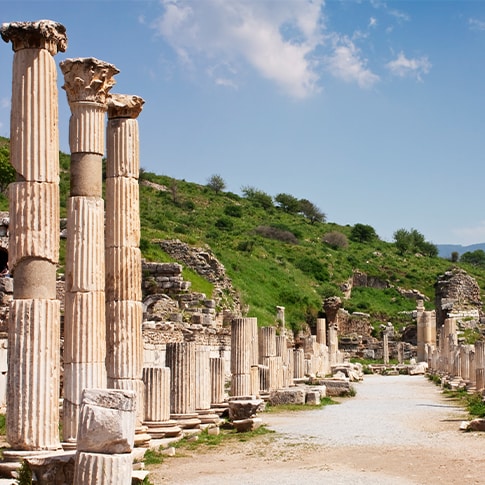
Home to Timeless Treasures
The most valuable artifacts unearthed during archaeological excavations at the Ephesus site are preserved and displayed at the Ephesus Museum in the Selçuk district. Unlike conventional museums, it follows a thematic layout organized by excavation area rather than strict chronology, offering visitors a richer and more contextual narrative. Among its finest masterpieces are the renowned statues of the “Great” and “Beautiful” Artemis, which illuminate the belief systems and aesthetic values of antiquity. These works highlight Ephesus as a major religious center dedicated to the cult of Artemis. Through carefully curated displays, visitors can trace how artistic styles and sacred imagery evolved over time
From | To | Fare Type | Dates | Price |
|---|---|---|---|---|
| Tokyo (NRT) | Izmir (ADB) | Round-trip / Economy | Tue, December 22 - Tue, January 05 | From JPY253,220 Last update 1 day ago |
| Tokyo (HND) | Izmir (ADB) | Round-trip / Economy | Wed, December 16 - Wed, December 30 | From JPY268,510 Last update 23 hrs ago |
| Osaka (KIX) | Izmir (ADB) | Round-trip / Economy | Tue, December 22 - Tue, January 05 | From JPY256,190 Last update 1 day ago |
Let Turkish Airlines Blog inspire you for your journey to Ephesus Ancient City!
Explore in-depth guides, insider tips, and cultural stories on the Turkish Airlines Blog to enrich your trip. Discover Ephesus before you arrive and design a magical journey tailored to your interests.
Discover