
Discover the World Heritage destinations
Stories that began thousands of years ago still live on in places around the world. We have brought together destinations recognised for their outstanding cultural, historical and natural heritage. Connect the stories of the past with your journey today.
Singapore (SIN)to
Izmir (ADB)Wed, December 30 - Wed, January 13FromSGD958Last update 12 hrs agoRound-tripEconomy
Singapore (SIN)to
Antalya (AYT)Wed, December 30 - Wed, January 13FromSGD958Last update 12 hrs agoRound-tripEconomy
Singapore (SIN)to
Nevsehir (NAV)Tue, December 29 - Tue, January 12FromSGD954Last update 11 hrs agoRound-tripEconomy
Singapore (SIN)to
Dalaman (DLM)Tue, December 29 - Tue, January 12FromSGD958Last update 11 hrs agoRound-tripEconomy
Singapore (SIN)to
Bodrum (BJV)Wed, December 30 - Wed, January 13FromSGD958Last update 12 hrs agoRound-tripEconomy
İstanbul
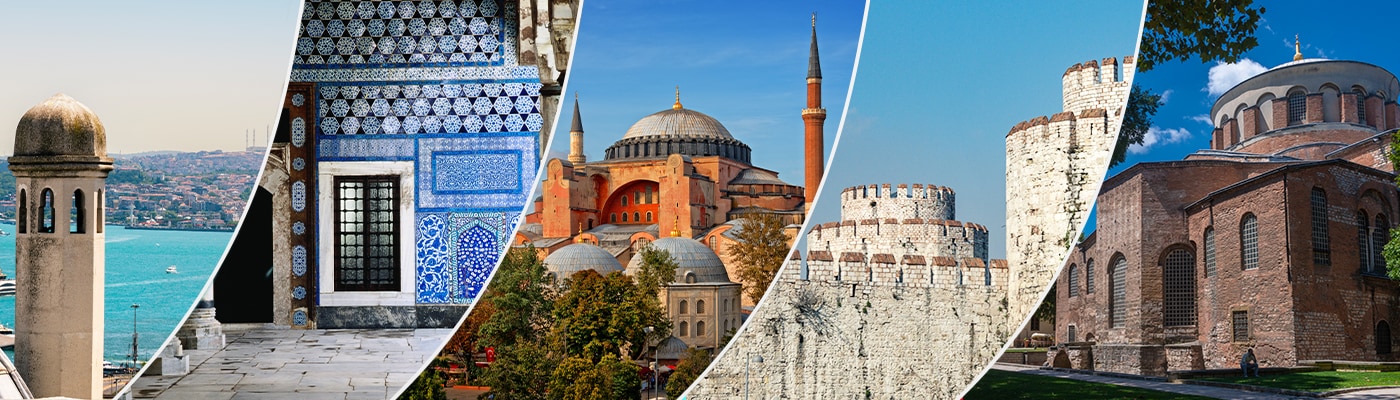
Istanbul is one of the world’s great crossroads, and its UNESCO World Heritage sites reflect this unique history. The Historic Areas of Istanbul, including landmarks such as Hagia Sophia, the Blue Mosque and Topkapi Palace, are recognized for their outstanding universal value. Within a short distance, you can explore historic city walls, magnificent mosques, churches and bazaars that tell the story of empires spanning centuries. This rich cultural landscape makes Istanbul not only a modern global city, but also a living museum at the meeting point of continents. Visiting its UNESCO-listed sites is an invitation to experience how different civilizations have shaped these historic areas, and how Istanbul continues to connect people and cultures today.

Göbeklitepe
Approximately 18 km northeast of the Şanlıurfa city centre is Göbeklitepe, an illustrious archaeological site offering insight into history’s depths. The site, inscribed on the UNESCO World Heritage List in 2018, is around 12,000 years old – 7,500 years older than even the Egyptian Pyramids. Known as the first temple built during the time of hunter-gatherer communities, Göbeklitepe – almost at the ground zero of history – welcomes hundreds of thousands of visitors every year.

Ephesus Ancient City
As a gateway to the ancient Mediterranean realm, Ephesus is one of Türkiye’s and the world’s most famous ancient cities. Added to the UNESCO World Heritage List in 2015, the ancient city of Ephesus holds a deep-rooted history dating back to 6,000 BC. The city, located within the borders of İzmir’s Selçuk district, contains a number of significant structures, including the House of the Virgin Mary, the Library of Celsus, the Great Theatre, the Baths of Varius, and the Temple of Artemis, one of the Seven Wonders of the World.

Göreme National Park and Cappadocia
Cappadocia and the Göreme National Park are renowned for their evocative fairy chimneys, rock formations that are the subjects of numerous photographs. The dovecotes hewn into the high slopes of the valleys and rock-carved monks’ cells in the valleys’ depths add a unique perspective to the area. In 1985, Göreme National Park and Cappadocia were inscribed on the UNESCO World Heritage List and, from the region’s underground cities to its churches, it is an important part of our human heritage.

Hierapolis
A setting of natural art, Pamukkale welcomes millions of tourists every year. Frozen white travertines that resemble waterfalls are the region’s signature and adjacent to these natural wonders in Denizli is the ancient city of Pamukkale Hierapolis. As one of the world’s most striking and well-preserved ancient cities, Pamukkale Hierapolis is famous for its healing thermal waters, believed to be beneficial for various ailments. Hierapolis and the travertines have been on the UNESCO World Heritage List as cultural and natural heritages since 1988.

Aphrodisias
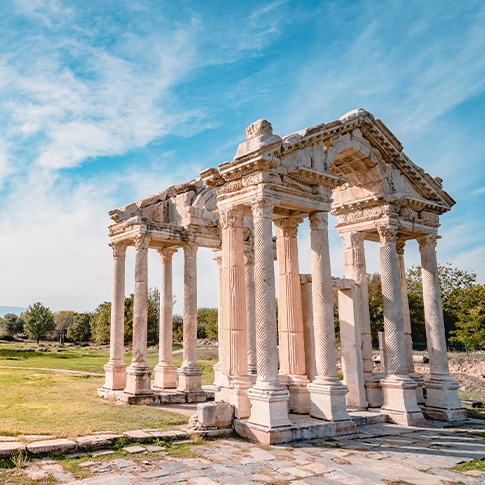
The ancient city of Aphrodisias is one of the most versatile centres of antiquity. Named for Aphrodite, the goddess of love and beauty, graffiti in the site alludes to a statue of Eros, a gift from the Roman Emperor Caesar to Aphrodite. The most valuable structure in the ancient city, which was included in the UNESCO World Heritage List in 2017, is the Temple of Aphrodite. Retaining all its splendour, the temple is an architectural wonder of ancient times. In addition, the 7,000-seat white marble theatre and the Aphrodisias Museum are definitely worth a visit.

Mount Nemrut
Named a UNESCO World Heritage Site in 1987, Mount Nemrut is often referred to as the “8th Wonder of the World”. At 2,150 meters above sea level, Nemrut is a historical crossroad of the Eastern and Western civilizations. Additionally, the most magnificent sacred ruins from Anatolia’s Hellenistic Period are here: Mount Nemrut is the world's highest open-air museum, housing a dramatic mausoleum erected by the Commagene king, Antiochos I, to express his gratitude to the gods and his ancestors, and featuring statues rising up to ten meters tall.
Singapore (SIN)to
Round-trip
Economy
Singapore (SIN)to
Round-trip
Economy
Singapore (SIN)to
Round-trip
Economy
Singapore (SIN)to
Round-trip
Economy
Singapore (SIN)to
Round-trip
Economy
Singapore (SIN)to
Round-trip
Economy

Neolithic Site of Çatalhöyük
About 40 kilometres from Konya, Çatalhöyük is among the first sites that come to mind when discussing the Neolithic Era (10,000-6,000 BC) as it is one of the oldest settlements in the region from that period. The first finds at Çatalhöyük date to 7,400 BC and the area has shed light on human history since its discovery in 1958. The first house architecture, high-relief mother goddess motifs, and a city plan believed to be egalitarian are some of the elements that make Çatalhöyük unique. As of 2012, the site has been included in the UNESCO World Heritage List.
Xanthos-Letoon
About four kilometres apart, Xanthos and Letoon are two important ancient centres located within the borders of Antalya and Muğla. Xanthos was the largest administrative centre of Lycia in antiquity, while Letoon was the religious centre of that era. Both sites are highly significant to our world heritage in terms of their archaeological value. Xanthos and Letoon have been on the UNESCO World Heritage List since 1988.
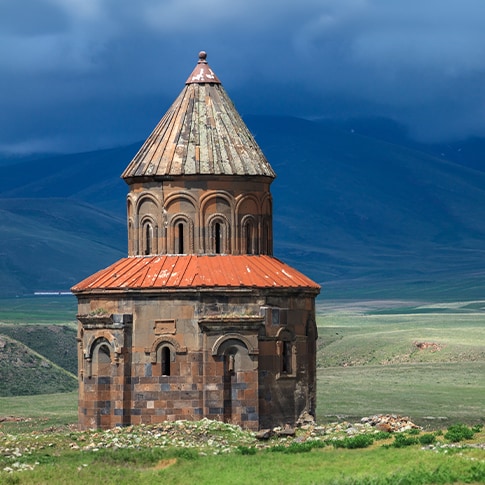
Archeological Site of Ani
Ani Ruins, located in eastern Türkiye, is a remarkable archaeological site that reflects a rich blend of cultures, religions, and architectural styles. Recognizing its outstanding universal value, UNESCO inscribed Ani on the World Heritage List in 2016. This status highlights Ani’s importance not only for Türkiye, but for all humanity, as a unique record of medieval urban life on the Silk Road. UNESCO World Heritage protection helps ensure that Ani’s fragile structures and landscapes are preserved for future generations. Through conservation efforts guided by UNESCO standards, visitors can continue to explore Ani and better understand the shared heritage of our world.
22 sites from Türkiye inscribed on the UNESCO World Cultural Heritage List
The UNESCO World Heritage List, which brings together exceptional sites of historical and geographical significance, continues to build one of the most important archives of world history. With the addition of Sardis Ancient City and the Lydian Tumuli of Bin Tepe in 2025, Türkiye now holds 22 sites on the UNESCO World Heritage List, placing it in a prominent position. Let us explore these cultural treasures together.
Discover